
Article
Price, Condition, and Warranty Differences Among Refurbished and Open-Box Products on International Shopping Sites
 0
0
 0
0
A refurbished laptop listed for $450 can look like a much better deal than the same model sold new in Korea for KRW 900,000. That comparison can change after international shipping, import taxes, card conversion costs, a missing charger, and the possibility of paying overseas return freight if the unit arrives with a problem.
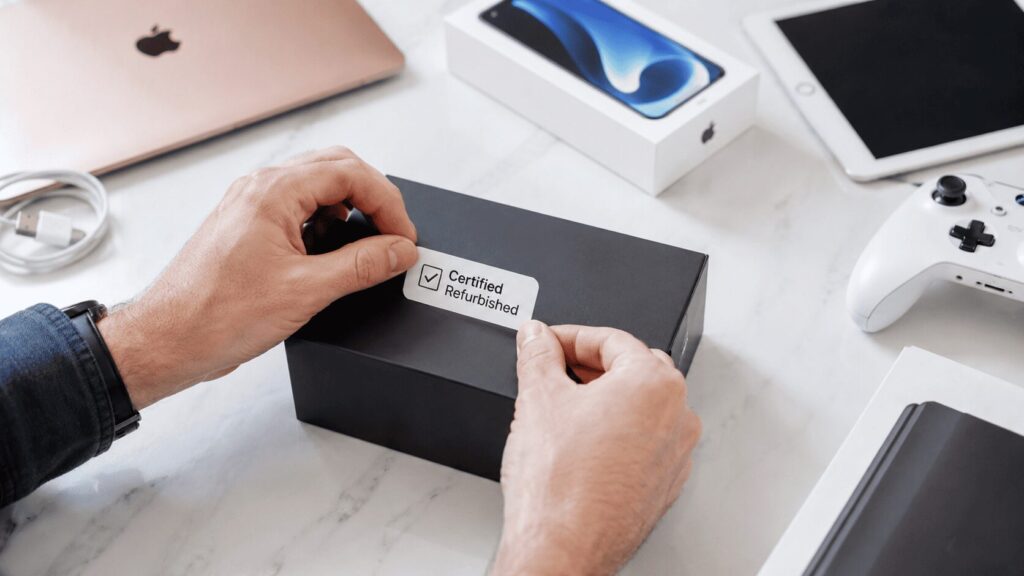
The condition label creates another complication. “Refurbished,” “Certified Refurbished,” “Renewed,” “Open Box,” and “Like New” do not have one universal definition across shopping sites. The same phrase can represent manufacturer-controlled refurbishment on one platform and seller inspection on another.
Before buying, compare the exact condition standard used by the marketplace, the company responsible for inspection, the parts that may have been replaced, the final landed cost in Korea, the warranty route, and the evidence required for a return.
Marketplace Condition Grades and Inspection Standards
Condition names should be interpreted according to the marketplace where the product is listed.
eBay currently distinguishes several refurbished grades. Its “Certified – Refurbished” condition refers to products inspected, cleaned, and refurbished by the manufacturer or a manufacturer-approved vendor to meet manufacturer specifications. “Excellent – Refurbished,” “Very Good – Refurbished,” and “Good – Refurbished” are professionally refurbished products sold by qualified sellers, with the allowed cosmetic wear increasing by grade. eBay also defines “Open box” separately as an item in excellent, new condition with no wear, although original packaging or protective wrapping may be missing or unsealed.
Amazon uses its own terminology. Amazon’s published Renewed guidance describes Renewed products as pre-owned products inspected and tested by Amazon-qualified suppliers or Amazon to work properly and meet the applicable condition standard. Amazon also distinguishes ordinary used or open-box conditions from Renewed products, so a “Used – Like New/Open Box” listing should not automatically be treated as equivalent to an Amazon Renewed product.
Apple Certified Refurbished is different again because Apple itself controls the program. Apple states that its Certified Refurbished products undergo functional testing and include its standard one-year limited warranty.
This produces an important distinction:
| Listing type | Main condition question |
|---|---|
| Manufacturer Certified Refurbished | What does the manufacturer’s refurbishment program replace and test? |
| Marketplace Refurbished | Which approved seller or repairer performed the work? |
| Seller Refurbished | What standards does that particular seller follow? |
| Open Box | Why was the packaging opened, and was the unit actually used? |
| Display or Exhibition Unit | How long was it powered on or handled, and what wear resulted? |
Even identical grade names should not be compared without reading their definitions. “Excellent” on one marketplace may permit minor cosmetic marks, while another program may require an almost new appearance.
An open-box label also does not answer whether the item was returned because the buyer changed their mind, used for demonstration, or merely opened for inspection. Read the product-specific description and photographs rather than assuming that “open box” means unused.
Refurbishment Providers, Batteries, and Replacement Parts
The next question is who actually worked on the unit.
A manufacturer-refurbished product has the clearest chain when the brand describes its process. Apple, for example, directly certifies the refurbished products sold through its own refurbished store. Apple also specifically states that its refurbished iPhones receive a new battery and outer shell, in addition to a one-year warranty.
That level of detail should not be assumed for every refurbished phone sold elsewhere.
On marketplaces, professional refurbishment may be performed by a qualified third-party seller rather than the original manufacturer. eBay’s Certified Refurbished category specifically requires manufacturer or manufacturer-approved refurbishment, while its other Refurbished grades can be handled by qualified sellers.
Before ordering a phone, tablet, laptop, camera, or other expensive device, look for answers to these questions:
- Who inspected the item?
- Who repaired it?
- Was the battery replaced?
- If not, what minimum battery capacity is guaranteed?
- Were the display, storage drive, keyboard, camera module, or other major components replaced?
- Are replacement components manufacturer-original, compatible third-party parts, or remanufactured parts?
- Are the charger and cables original or compatible replacements?
A statement such as “fully tested” is weaker than an inspection report that identifies what was actually tested. For battery-powered products, battery condition deserves separate treatment from cosmetic grade. A laptop can have an almost flawless chassis while retaining a heavily used battery. Conversely, a refurbished unit with a few visible scratches may have a new battery and be the better long-term purchase.
Request or save battery-health information whenever the platform provides it. For laptops, charging-cycle count can also be useful. For phones, confirm that the device has no activation lock and that the IMEI or serial number corresponds to the advertised model.
Accessories matter because replacing them after delivery increases the real purchase price. A generic charger may also be less desirable than the manufacturer’s original high-wattage adapter for a laptop that depends on a specific charging standard.
Overseas Purchase Cost Beyond the Displayed Price
The price shown on the product page is only the starting point for a Korean buyer.
A useful landed-cost calculation is:
product price + international shipping + applicable import tax + card or currency-conversion costs + forwarding fees + required missing accessories
Korea Customs currently provides an overseas-purchase tax estimator. Its guidance states that, for the import-declaration route, goods valued at USD 150 or less can qualify for duty-free clearance under the applicable small-value rules, while amounts above the threshold can be taxed on the total dutiable value rather than simply on the portion exceeding USD 150. The taxable basis can include the product price, freight, insurance, and other applicable components. Exact treatment depends on the product and import method, so the Customs estimator is safer than applying one fixed percentage to every electronic device.
This changes how a discount should be measured.
Suppose a refurbished laptop is:
**USD 520 product price
- USD 45 international shipping
- import charges according to the applicable classification
- card conversion cost
- USD 35 replacement charger**
The meaningful number is the final amount paid to place a fully usable laptop on your desk in Korea.
Compare that figure with the Korean new-product price for the same usable specification.
The comparison should also include differences that do not appear in the hardware specification:
Domestic new product
- Korean power adapter included
- straightforward domestic return
- Korean official warranty route
- easier tax invoice or purchase documentation
- no overseas return postage
Overseas refurbished product
- lower initial product price
- possible import charges
- international shipping
- possible foreign-card conversion cost
- uncertain Korean warranty eligibility
- potentially expensive return shipment
A 30% headline discount can become a 10% effective discount after those additions. At that point, buying new domestically may provide better value.
A genuinely large gap can still justify direct purchase, particularly when the refurbishment program has a clear inspection standard and warranty.
Warranty Providers and Korean Repair Eligibility
Warranty language needs to identify the party that will actually handle a failure.
A marketplace warranty, seller warranty, and manufacturer warranty are different arrangements.
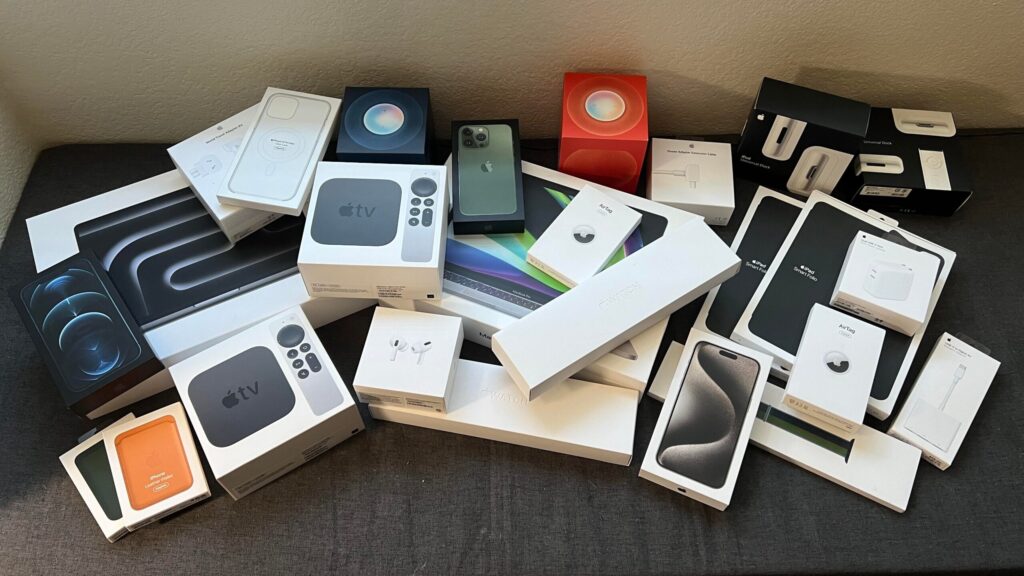
Apple Certified Refurbished products currently include Apple’s standard one-year limited warranty. That sounds straightforward, but an overseas purchase still requires a product-specific international-service check. Apple’s U.S. warranty terms state that service for products including iPhone, iPad, Apple TV, HomePod, and Apple Vision Pro may be restricted to the country where Apple or an authorized distributor originally sold the device. Apple also notes that where international service is available, different import, VAT, and related costs may arise.
The lesson is not that overseas Apple products cannot be repaired in Korea. It is that “Apple warranty included” should not be interpreted as an automatic promise that every foreign model will receive Korean warranty service.
Check the exact model and serial number with the manufacturer’s Korean support system before buying whenever possible.
eBay follows another model. Its Refurbished program includes at least a one-year warranty through its warranty arrangement, and eBay’s condition definitions also describe the one-year coverage attached to qualifying refurbished grades. A Korean buyer still needs to inspect the actual warranty terms and territorial eligibility on the listing before assuming that a claim can be completed locally.
Amazon Renewed on Amazon.com uses its own Renewed Guarantee framework. Current Amazon guidance states that qualifying Renewed purchases can be returned for replacement or refund if they do not perform as expected, with the exact protection depending on the applicable Renewed product and program terms.
Before paying, record:
warranty provider → warranty length → covered defects → battery coverage → Korean service eligibility → claim destination → buyer shipping responsibility
If the only warranty says “seller warranty 12 months,” find out what that means operationally.
Does the seller pay a Korean repair shop? Do they send replacement parts? Must the entire laptop be shipped back to the United States? Does the buyer pay first and seek reimbursement afterward?
A warranty that requires a KRW 150,000 international shipment for a KRW 300,000 device has much less practical value than the same warranty serviced locally.
International Return Freight and Effective Refund Value
Return policy is where an overseas bargain can become expensive.
eBay’s current policy illustrates why the reason for the return matters. When an item is damaged, faulty, or does not match the listing, the seller generally pays return shipping under the stated policy. When a buyer simply changes their mind, return freight can be the buyer’s responsibility if that is what the seller’s policy specifies.
That difference becomes much larger with cross-border shipping.
A seller advertising “free shipping” is describing delivery to you, not necessarily the cost of sending the item back. The issues described in Return Freight Costs on Free Shipping Direct Imports become especially relevant for refurbished laptops, monitors, cameras, and other products that are heavy, valuable, or require insured international return shipping.
Before ordering, compare three return scenarios separately:
Item materially different from listing
Who pays return freight and how is the label issued?
Item develops a covered fault
Does the warranty require repair, replacement, or shipment overseas?
Change-of-mind return
Is the return accepted after opening, and who pays both shipping directions?
Do not assume that marketplace buyer protection eliminates the shipping problem. It may protect the purchase price in qualifying cases while still requiring evidence, deadlines, and a particular return procedure.
Large items deserve additional caution. Shipping a monitor or desktop computer internationally can require oversized packaging, insurance, and substantial freight charges.
The cheapest refurbished unit should therefore be compared using its effective recoverable value if something goes wrong, not only its purchase price.
Image placement: after this section
Image search key: international electronics return shipping refurbished laptop parcel cost
Alt: Overseas refurbished electronics return showing international freight, insurance, packaging, and refund considerations
Arrival Records, Serial Numbers, and Unboxing Evidence
The most important inspection should happen before normal use begins.
Record the package from the moment it arrives.
For an expensive international order, make a continuous unboxing video showing the shipping label, sealed package, protective materials, product, included accessories, and initial external condition.
Then photograph:
- front, rear, sides, and corners
- screen or display surface
- ports and connectors
- charger and accessories
- model number
- serial number or IMEI
- visible scratches or dents
- packaging damage
Do not publish serial numbers or IMEIs publicly. The purpose is to preserve them for the marketplace, seller, manufacturer, payment provider, or shipping claim if necessary.
Power the device on and record its initial condition as soon as reasonably possible.
For a phone or tablet, check battery health, charging, cameras, speakers, microphone, Wi-Fi, Bluetooth, display, buttons, biometric sensors, and activation status.
For a laptop, also check the keyboard, trackpad, USB ports, display output, SSD capacity, memory, charging cycle information where available, and the specifications reported by the operating system.
Compare everything against the listing you saved before purchase.
If a listing promised a 1 TB SSD but the delivered laptop has 512 GB, document that before changing hardware or extensively configuring the machine.
The same applies to battery claims. If the seller guaranteed a particular battery-health threshold and the first boot shows a lower figure, capture the screen immediately.
Avoid throwing away the box until the return period has expired. Some return procedures require suitable packaging, and the original international shipping carton may be the safest available option.
Site-Specific Return Periods and Opening Restrictions
The final comparison should be made at the individual listing level because marketplace-wide policies can contain exceptions.
Save a copy or screenshot of the return conditions before ordering.
Record:
return deadline → start date of return period → opened-item restrictions → restocking deductions → buyer-paid freight → defective-item procedure
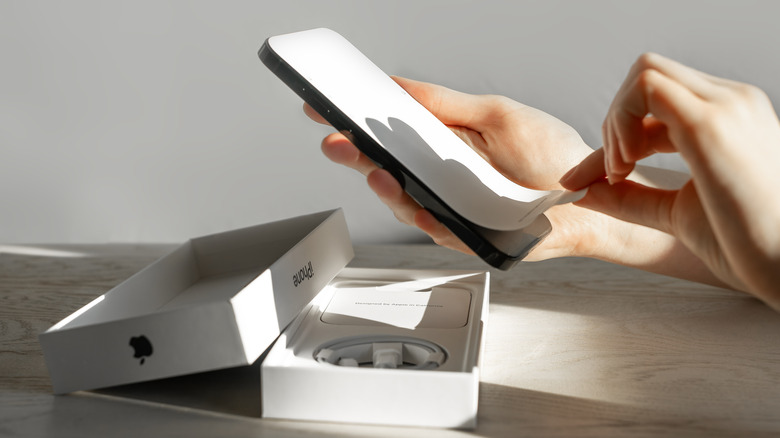
This matters especially with open-box products because opening the package yourself can make it harder to establish which marks or missing accessories existed before delivery unless the arrival condition was recorded.
For eBay transactions, the seller’s return policy and the reason for the return affect freight responsibility, while eBay Money Back Guarantee can apply to qualifying cases involving items that fail to arrive, arrive damaged or faulty, or do not match the listing.
Amazon Renewed has its own guarantee terms rather than simply treating every Renewed product as an ordinary used item. Amazon’s current U.S. Renewed guidance describes a replacement or refund route for qualifying products that do not look or work as expected.
Apple Certified Refurbished follows Apple’s own sales and warranty system rather than a third-party seller’s refurbishment policy.
Those differences are why a general statement such as “refurbished products have a 90-day return policy” is unreliable across international stores.
The applicable product page and destination-country terms should control the decision.
Final Price, Condition, and Risk Comparison
A useful comparison can be completed with four numbers and four records.
First calculate:
displayed price → landed Korean cost → possible return cost → domestic-new price
Then document:
condition definition → refurbishment provider → warranty route → arrival evidence
For a low-cost accessory, a seller-refurbished product with limited warranty may be an acceptable risk.
For a primary laptop or phone, manufacturer-certified refurbishment becomes more attractive when the discount remains meaningful after taxes and shipping.
An open-box product can be excellent value when the listing confirms virtually no use, all accessories are present, normal warranty remains available, and the return route is practical.
The purchase becomes harder to justify when the seller cannot identify the battery condition, refurbishment provider, parts used, serial information, or warranty destination.
The final sequence is:
marketplace condition standard → actual repair provider → battery and parts → landed Korean cost → warranty in Korea → international return cost → arrival documentation
The word “refurbished” is only a category label. The real value comes from what happened to the individual product, how much it costs after reaching Korea, and who takes responsibility if the condition is not what the listing promised.


